
Tags: VNA

Another Key Year For ECM – And Synapps – Is Starting

Mark Winstone gets out his crystal ball to try and see what 2015 looks like delivering for both NHS and other Enterprise Content Management customers

January is a natural time of year for reflecting briefly on what 2015 looks like shaping up to be.

Here at SynApps Solutions, the answer is ‘a pretty good one!’ We are going into 2015 after a strong 12 months. In particular, 2014 was a very strong year for us in the UK healthcare market. This was due to our work in the first part of the year around our Vendor Neutral Archive (VNA), which has now evolved into our new Clinical Content Store.

Some really significant customer wins are starting to come through on this, like our project at Northampton General Hospital (https://www.synapps-solutions.com/news/northampton-general-hospital-chooses-a-synapps-vendor-neutral-archive-content-store), more of which we will be sharing with you soon and which will be the basis for very strong growth in the months ahead for us. Which is great for us, sure – but the real significance of VNA/CCS is the way it’s starting to help NHS Trusts start to work together and start properly (and securely) sharing patient data at long last.

No wonder, then, that I and the rest of the SynApps team think our 2015 healthcare ‘story’ is going to be all about expanding our footprint in the Vendor Neutral Archive space – both with our existing and new customers, starting with conversations around the entry level VNA and then the Clinical Content Store. That’s because we see enormous potential in potentially retiring legacy systems that they have and transferring the real ‘gold dust’ into the Store.

We are also very much aligned, meanwhile, with the overall NHS mission of going paperless by 2015 (http://digitalchallenge.dh.gov.uk). That drive from central government is making budget available and allowing Clinical Chief Information Officers in the NHS to finally start investing in VNA-style platform implementations as opposed to print solutions, as the market finally moves on from the National Programme (for all of its many positives, it really is time to start thinking beyond it now). Oh, and one more thing we are really excited about, the development of Open Source ECM solutions especially for those areas of the NHS that have been neglected until recently.

Let’s conclude on the public sector side of things for now with a quick set of thoughts on cloud. We are getting a lot of interest outside the NHS as regards cloud-delivered ECM. (In the NHS, there are applications such as the personal health record which do lend themselves to more of a cloud-based application, but our take on that is that security concerns will tend to push managers to more of a ‘hybrid’ approach.) But we do have to express a bit of caution about any expectations that 2015 will be a massive year for G-Cloud (or what we must all now start calling the Government Digital Marketplace (https://www.digitalmarketplace.service.gov.uk). What we are finding as a long-term G-Cloud support and supplier is that G-Cloud seems to be more for commodity items buying and not for more configurable solutions. We are very happy with the CloudStore but, as it stands at least, expect to get more business with the UK public sector via the other buying frameworks out there as they tend to be more applicable to the kind of configurable solution we as a company tend to sell.

What do I mean by configurable? G-Cloud is great for when you say, ‘I want to buy an HR personnel records management solution for x pounds per month,’ you buy it, the functionality is fixed, it does what it says on the tin. The reality is, though, certainly with enterprise content management, that pretty much every customer we work with doesn’t want that – they want their ECM to be configured to work in line with how their specific business works. So for 2015 at least, we don’t think there will be a lot of content management procurement that will go through the Marketplace.

A move to platform ECM?

Healthcare was a very important area for us already, but the growth of acceptance of our VNA approach to helping hospitals deal with patient imagery and data is putting it ever-higher in our business mix; I would say probably 40 to 50% of our activity in 2015 as a company will be in healthcare, in fact.

But that doesn’t mean that our other corporate Enterprise Content Management (ECM) work is getting de-prioritised; far from it! We are going great guns with our key partners of EMC and Alfresco in promoting content management in all sorts of markets. Our business is about providing content management solutions, with healthcare as just one face of that.

What of that market, though – the wider content management one? It’s going to be another good year for ECM, we predict. For one, it is still very much a growth market and a growing business. In terms of other drivers, 2015 will see ECM become more and more about mobile access, we think – about being able to get your content management on the go/wherever the business needs it, there is quite a push in that direction in the marketplace. We are also definitely starting to hear more from our customers about a general move towards hosted solutions and many more ‘all cloud’ solutions, too.

What’s behind that shift: businesses are much keener on platform solution these days. Or rather, whereas at one time we used to see ECM as all about one application or project, now it’s much more about creating a more sustainable, long-term environment for important information. Just before Christmas, for example, I spoke to a manufacturing company who see their 2015 mission as about getting proper control of what they call their ‘crown jewel’ documents – documents that contain the ‘secret recipes’ for the most profitable products they offer – but who are simultaneously looking at content management as a platform for their organisation over a long period of time. In terms of crystal ball gazing, I expect to have a lot of similar conversations in the next 12 months.

Well, there you have it – our view on what we expect to see for us as a company in 2015 in the health and wider ECM sectors. Can I take this opportunity to wish you all the very best in this bright New Year!
Drive up Care Through Sharing Information – A Patient Centric Approach To Viewing All Medical Information

By Tony Backhouse, Business Development Manager – Healthcare Division, SynApps Solutions

Last time I talked a bit about the business drivers for NHS IT leaders in terms of bringing together both the structured and unstructured data. I then moved the discussion on to look at how our new Clinical Content Store can (and does) address those issues and help you, as a Trust IT leader, with those challenges.

I want to spend some time talking in a bit more detail about the specifics of the Store and what we are currently offering.

In these past few posts, we have been discussing NHS England Chief Executive Simon Stevens’ visionary ‘Five Year Forward View’ where he calls for more collaborative, patient-centred care, and access to more and more information to establish a complete picture of a patient’s health.

That’s a movement that’s happening not just at the departmental or even at the hospital-wide level, but beyond it, as different healthcare providers and, soon, social care and other stakeholders including patients themselves, seek to share patient insights to improve care across time and across more than one clinical context.

The SynApps Solutions approach to clinical content management is going to play a key role in addressing that – as it will allow all sorts of healthcare organisations to create a comprehensive, patient-centric view across all current organisational boundaries, irrespective of the content’s format or origin. The aim, at least at national, political level, is to finally get the true EPR happening (sorry but we don’t believe that the mega-suite is the answer to all our EPR prayers) and to becoming a ‘paperless NHS’ (http://digitalchallenge.dh.gov.uk ).

The problem is that this is happening in a time of financial constraint. Indeed, an immediate problem is the end of a lot of old Programme radiology, PACS and EPR contracts. Which means Trusts really have to get on top of what the systems of the future need to be to manage and share the Complete Patient Record.  And to do that they need to take a new approach to the management of all of this information.

So hospitals have to think about what could be the most cost-effective way to migrate back existing imaging data to new platforms while simultaneously ensuring that data remains intact, available and free from vendor lock-in. And as you may know, a popular approach to this challenge has been to consolidate multi-department PACS silos into a vendor neutral archive (VNA), as this offers Trusts an opportunity to consolidate imaging demands into a single repository, using agreed standards to ensure easy data retrieval out again.

The SynApps Clinical Content Storecan do all that, as it has a huge VNA component – but a lot more. A strong claim? Well, how about having a really powerful VNA with the added benefit of market-leading enterprise content management capabilities? What that means is the ability to perform powerful clinical content sharing, storing and management at the top level. That’s to say, not just all the relevant medical images but all the digitised or electronic clinical info too – in one place – which means it immediately enables a fully working EPR. From paper notes to digital images, from hand drawn pictures to Medical Photography, from locked away structured data to video and audio clips.

We are very excited about what CCS means for both SynApps and the market. Please drop us a line so we can continue the discussion.

We are currently offering a free consultative study to scope out the potential of CCS to meet your need, but be aware it is time-limited – so start talking to us today!

Please – take advantage of the seminar [https://www.synapps-solutions.com/events/addressing-the-twin-challenges-of-retiring-applications-while-increasing-access-to-patient-information] on Thursday 29th January at 12.30pm at the London Chamber of Commerce, EC4R 1AR, and find out more about the Clinical Content Store and how it can help you meet your EPR challenge.


Major UK Trust Selects SynApps As New Image Management Solution Partner

Kingston Hospital NHS Foundation Trust says this will provide us with the basis to share patient information and radiology images more easily within the Trust and with other London hospitals

Maidenhead, UK – 14 January 2015 – Content management leaderSynApps Solutions has today announced that London’s Kingston Hospital NHS Foundation Trust will use its VNA (Vendor Neutral Archive) platform to secure transparent and safe access to images and patient information throughout a patient care pathway. 

SynApps has signed a ten-year contract to supply a VNA Clinical Content Store (Vendor Neutral Archive) and ECM (Enterprise Content Management) Platform.

The solution comprises the VNA, an emerging standards-based way of extending PACS (Picture Archiving and Communications System) services to incorporate DICOM and other format content to make the sharing of medical data easier for clinicians, as well as making patient records available across any combination of service providers – within both the NHS and beyond. The solution also incorporates XDS Repository/Registry cross-document sharing capability, which Kingston can use to create electronic patient records that can be readily accessed by doctors.

The need for a PACS system is driven by the fact that most patients undergo radiology examinations as part of routine diagnosis and treatment process for their illness or injury. The management and communication of the resulting images and information rapidly and efficiently with healthcare stakeholders is increasingly being seen as central to delivering high quality patient care, according to NHS England.

“We feel we are making real a long-term vision of VNA and electronic data and content management all living in one unified repository with the SynApps solution,” confirmed Norman Harling, Deputy Director of Information Management & Technology at Kingston Hospital NHS Foundation Trust.

“We are delighted to be helping Kingston improve the availability of patient information and radiology images to Kingston clinicians and eventually to other London hospitals through our VNA,” added SynApps Solutions’ Managing Director, Jim Whitelaw.

“What makes a VNA-based solution so powerful is that we know it works, we know it’s in place – and that a VNA approach can lay the ground work for a truly integrated electronic patient record as demanded by the NHS 2018 Paperless challenge.

“The interest and take up of the solution by UK Trusts is testament to the VNA approach’s huge potential.”

About Kingston Hospital

Kingston Hospital supports around 350,000 people in the surrounding area including Kingston, Richmond, Roehampton, Putney and East Elmbridge. We were the first acute Trust in south west London to gain Foundation Trust status when we were authorised in May 2013.

We have approximately 520 beds and directly employ around 2,750 staff with another 300 staff employed by contractors but working on behalf of the Trust. Our main site is the Kingston Hospital site but we also run a number of outpatients clinics in the community, including in Raynes Park, Surbiton, Queen Mary’s Roehampton and Teddington. We provide a full range of diagnostic and treatment services and our flagship services include maternity, day surgery and care for patients with dementia.

About SynApps

SynApps is an independent services and solutions company specialising in Enterprise Content Management (ECM) technologies. Founded in 2003 by former Documentum services professionals, the company provides consultancy, implementation and support services for EMC Documentum, and has authored a suite of content integration solutions, ConXApps, that allow businesses to quickly maximise their investment in ECM technologies.

 Organisations across healthcare, government and commercial markets rely on SynApps solutions and services to capture and share knowledge more dynamically and efficiently.

Find out more at synapps-solutions.com, or follow the firm on Twitter @SynappSol


Buying an EPR System Won’t Save the NHS

By Tony Backhouse, Business Development Manager – Healthcare Division, SynApps Solutions

Last time we spoke, I started explaining why SynApps has expanded the functionality of our pioneering VNA (Vendor Neutral Archive), our system to help hospitals better handle their digital information (see ‘Saving the NHS – Let’s Start with Local Health IT’).

I also put that work in the context of recent NHS thinking on the central place of localised, useful health IT systems and how those local systems can be built from the ground up. This time, I want to put a bit more context around what we’ve done with VNA.

A term that I need to wheel out again to get us started is the EPR – the Electronic Patient Record. I hesitate a bit as the term has so much legacy, not all of it good, in the NHS (thinking about the National Programme for IT, of course – which failed to deliver a national EPR, despite all our best efforts.  The thing is, the concept of Electronic Patient Records is still a really good idea. It would be fantastic to centrally store, but easily access, your patient history and data wherever you needed it.

That’s especially true as we start to use more and more digital information and images in the NHS. Think about radiology images, MRI scans, output from an echocardiogram – they really all should be available in a true EPR. Plus there are lots of reasons clinicians might want to take pictures of you too, to record a specific injury on the night you were brought into A&E, or the progress of a bedsore.  Those images could be virtually and securely attached to all those images in your digital, e-patient folder.

So back to the true EPR. This is where it gets a bit complicated, as information in EPR Systems have structured, electronic file data that’s not that hard to store and work with (and there are some systems out there described as ‘EPRs’ which are okay at what they do). What about all the unstructured data, though? That’s the Images we have talked about, the GP notes, the letter or email he or she sent to your specialist two years ago – there’s a lot of information we’d like to collate and keep with you on that patient journey you’re making through the NHS, across your lifetime.

The reality is that a proper EPR is going to have to be able to manage huge amounts of both structured and unstructured, document and paper-based content. Most experts agree the ratio between unstructured (GP letter etc. digital image or sound file) data and structured is in the order or 80:20 – that’s to say, 80% is unstructured.

How does this connect back with what we have been doing at SynApps Solutions? Well, what we had with our great VNA archive was a brilliant way of helping you handle part of that 80% – the images from you PACS, RIS and Ophthalmology systems as well as those poorly filed Medical Photography files. But we needed to give you more. And that’s what the Clinical Content Store (CCS) offers – a way to deal with the rest of the 80%, the unstructured ‘eight tenths of the iceberg’ of that patient content you want to be able to work with as well as the inactive part of the 20% that is either Read Only or locked in departmental systems.

To do that, you’d really like to be to offer both a VNA and a proper clinical archive, an intelligent repository that will offer a way to access all the data you need, importantly, in tandem with your EPR System. You can work with that data in your team, by the way – but it will also allow it to be worked on by other organisations, giving the social care team, as well as other hospitals and primary care or mental health institutions that act as stations on that (lifelong) patient journey, access.

Best of, well, multiple worlds?

The great news is that the CCS pulls all this together. One, it helps you manage all your Read Only data. Two, it gives you a repository to start working with all your unstructured information, too.

But what is really exciting is that it goes beyond what an EPR currently does and links together all that great new content in a patient centric view for sharing both in and out of your hospital.

Just one extra data point to get you excited about CCS; one hospital that we work with is telling us that by using our system is going to save them at least one million pounds a year in not having to directly work with such legacy systems any more.

Maybe now you can see why I and the rest of the SynApps healthcare team are so excited about the Clinical Content Store and what we know it can do for Trusts.

Which is, building out of the EPR – but in a new way of working with all your patient data, in a way that doesn’t force you to compromise.

Now that is exciting!

We are currently offering a free consultative study to scope out the potential of CCS to meet your need, but be aware it is time-limited – so start talking to us today!

Please – take advantage of the seminar [https://www.synapps-solutions.com/events/addressing-the-twin-challenges-of-retiring-applications-while-increasing-access-to-patient-information] on Thursday 29th January at 12.30pm at the London Chamber of Commerce, EC4R 1AR, and find out more about the Clinical Content Store and how it can help you meet your EPR challenge.

Improve Local NHS IT Fast – Get Rid Of the Legacy

By Tony Backhouse, Business Development Manager – Healthcare Division, SynApps Solutions

I want to take the opportunity with this blog to talk a bit more about the challenges that NHS customers have been telling us about – the kinds of challenges that have led us at SynApps Solutions to build not just our established VNA PACS platform but also our new Clinical Content Store (CCS) (see ‘Saving the NHS – Let’s Start with Local Health IT’)

What we are hearing from NHS Trust leaders can be summed up under the following headings, I think:

What to do with all the old data: the NHS legacy system challenge

Hospitals maintain a large number of systems for managing patient records and associated information. The problem: a lot of these systems have become “Read Only” or obsolete or are to be consolidated and replaced by newer technology. At the same time, they also have a lot of in-house applications that have accumulated large volumes of data and/or documentation over the years. And while a lot of this information is no longer ”Active”, it needs to be maintained, which can be costly. Meanwhile, in most cases, unfortunately, the performance of these systems is getting worse over time.

If they could, Trusts would like de-commission these systems so as to save the costs of all the associated software licences, servers, storage, and ongoing maintenance and administration these legacy systems represent. Especially, for all the multiple back up and archiving routines. But as I said, the data in these systems is still important and needs to be preserved. In fact, gaining access to this information in a patient-centric manner, whether across the hospital or externally across the patient journey is seen as something that will add significant value in the kind of new NHS its Chief Executive, Simon Stevens, envisages.

But first, we need to do some work on that mass of information that’s built up. We know that some of it we need to keep, for compliance reasons, meaning it cannot be deleted or altered. And it must be auditable, and readily available when asked for.

Well, the good news here is that the Clinical Content Store we have just built will let you work very effectively with that information, letting you easily retire, retrieve and in general, better manage inactive clinical application data and documents in a central, scalable, non-proprietary, compliant archive. Just some of the ways it does that is by a powerful, Web-based interface that enables search of data from decommissioned applications, even as far as cross-application searching via a single portal to view the information. Another feature is the way we can guarantee you a full audit, ensuring that the data is not tampered with and there is an unbroken ‘chain of custody’ from the point of data extraction to future usage.

All this capability means that we know the CCS can handle a big part of the admin load of the Trust. But that’s not all it can do, nor is it the only problem it was set up to tackle. Take another:

The data burden from your current, operational IT

You will also, of course, be running core, strategic systems that support the day-to-day running of your Trust – which tend to run on high-end servers, associated with high-cost storage platforms and which tend to be buttressed by expensive backup systems and configured for high availability and disaster recovery.

All of this costs – and as the volume of data being generated and managed by these systems grows, so does that cost. You will know that without effective management of such a stack, data application performance degrades, backups cannot be completed in available windows, additional software licences are required and upgrading applications becomes extremely difficult and time consuming. So you will have invested in archiving, 99% of which are point solutions addressing a particular system or data type – and whose use results in the creation of an increased number of information silos, which has just added to that legacy system and data problem we were just talking about.

What would be better? How about a unified archive platform, capable of ingesting and managing any type of data or content, structured or unstructured, on a low cost compliant infrastructure? A platform that also has a central archive that means your patients’ clinical data from legacy applications can be made available, so medical users have access to the information they need but admin people also have their needs met so as to serve the whole Trust’s business and compliance requirements. And what if that information can be shared using internationally recognized standards such as XDS?

If you had such a system, those legacy ones could be switched off, removing a huge chunk of support and maintenance costs. And as you retire old systems, you start to provide greater data availability for structured and unstructured data, as well as requiring less storage to accommodate the data. You can also stop paying unneeded application and database licenses and you will be able to reduce costs for backup, restore, and upgrades and cut down on all your data centre costs by removing solid servers that consume power, space and server support charges. The list goes on!

And that’s the list of what the Clinical Content Store can do. What’s better, we conservatively estimate that Trusts can bank on a data and storage bill of something like 60-70% less of what it would have been if you had kept it in your main operational system.

Putting all this together, it’s clear that the only real way to get on top of the data problem is to look for technology that works the way the CCS does.

Or even better, cut to the chase and use the proper Store itself!

We are currently offering a free consultative study to scope out the potential of CCS to meet your need, but be aware it is time-limited – so start talking to us today!

Please – take advantage of our seminar [https://www.synapps-solutions.com/events/addressing-the-twin-challenges-of-retiring-applications-while-increasing-access-to-patient-information] on Thursday 29th January at 12.30pm at the London Chamber of Commerce, EC4R 1AR, and find out more about the Clinical Content Store and how it can help you meet your EPR challenge.


SynApps Launches The Clinical Content Store – An Image-Enabled, Information-Rich Electronic Patient Record

UK healthcare providers can finally move beyond the traditional EPR, combining the best of new and old in one central, secure and easily searchable repository

 Maidenhead, UK – December 15, 2014SynApps Solutions, the Enterprise Content Management (ECM) solutions leader, has launched the Clinical Content Store (CCS), a next-generation data management system for digital patient record keeping.

The Store can hold all of a hospital’s medical images, including medical photography, as well as a wide range of other vital patient information too often locked away in niche departmental systems or in a read-only legacy system formats, as well as all the unstructured data that a true EPR (electronic patient record) demands.

The Store will also improve the sharing of information across the whole care pathway in or out of the hospital, a task made more challenging by the large number of hospital IT or PACS systems in the NHS that are too complex and expensive to maintain and which serve to place limits on viewing and sharing information.

The Store also comes on-stream at a time when former National Programme for IT (NPfIT) radiology and PACS outsourcing contracts finally wind down, forcing Chief Clinical Information Officers to find new image storage solutions in a context of financial constraint. A proven response to these challenges is the consolidation of PACS silos into one Vendor Neutral Archive (VNA), which is at the heart of the new SynApps product, but the Clinical Content Store is also a powerful data repository for all clinical and patient data, both structured and unstructured.

“We’re excited about Clinical Content Store as early customers in the NHS tell us it’s a fantastic place to start building powerful consolidated data repositories for all clinical and patient data,” commented Tony Backhouse, Business Development Manager – Healthcare Division for the company.

“These NHS customers also tell us they’re seeing a 70% reduction in the costs of keeping all their data in multiple systems when they’ve started using the CCS, with one institution already estimating is going to save at least £1m per annum by not having to directly work with legacy systems anymore,” added Backhouse.

Please – take advantage of the seminar [https://www.synapps-solutions.com/events/addressing-the-twin-challenges-of-retiring-applications-while-increasing-access-to-patient-information] onThursday 29th January at 12.30pm at the London Chamber of Commerce, EC4R 1AR, and find out more about the Clinical Content Store and how it can help you meet your EPR challenge.

About SynApps

SynApps is an independent services and solutions company specialising in Enterprise Content Management (ECM) technologies. Founded in 2003 by former Documentum services professionals, SynApps provides consultancy, implementation and support services for EMC Documentum and Alfresco, and has authored a suite of content integration solutions, ConXApps, that allow businesses to quickly maximise their investment in ECM technologies.

Organisations across healthcare, government and commercial markets rely on SynApps solutions and services to capture and share knowledge more dynamically and efficiently.

Find out more at synapps-solutions.com, or follow us on Twitter @Synappssol


Northampton General Hospital Chooses a SynApps Vendor Neutral Archive Content Store

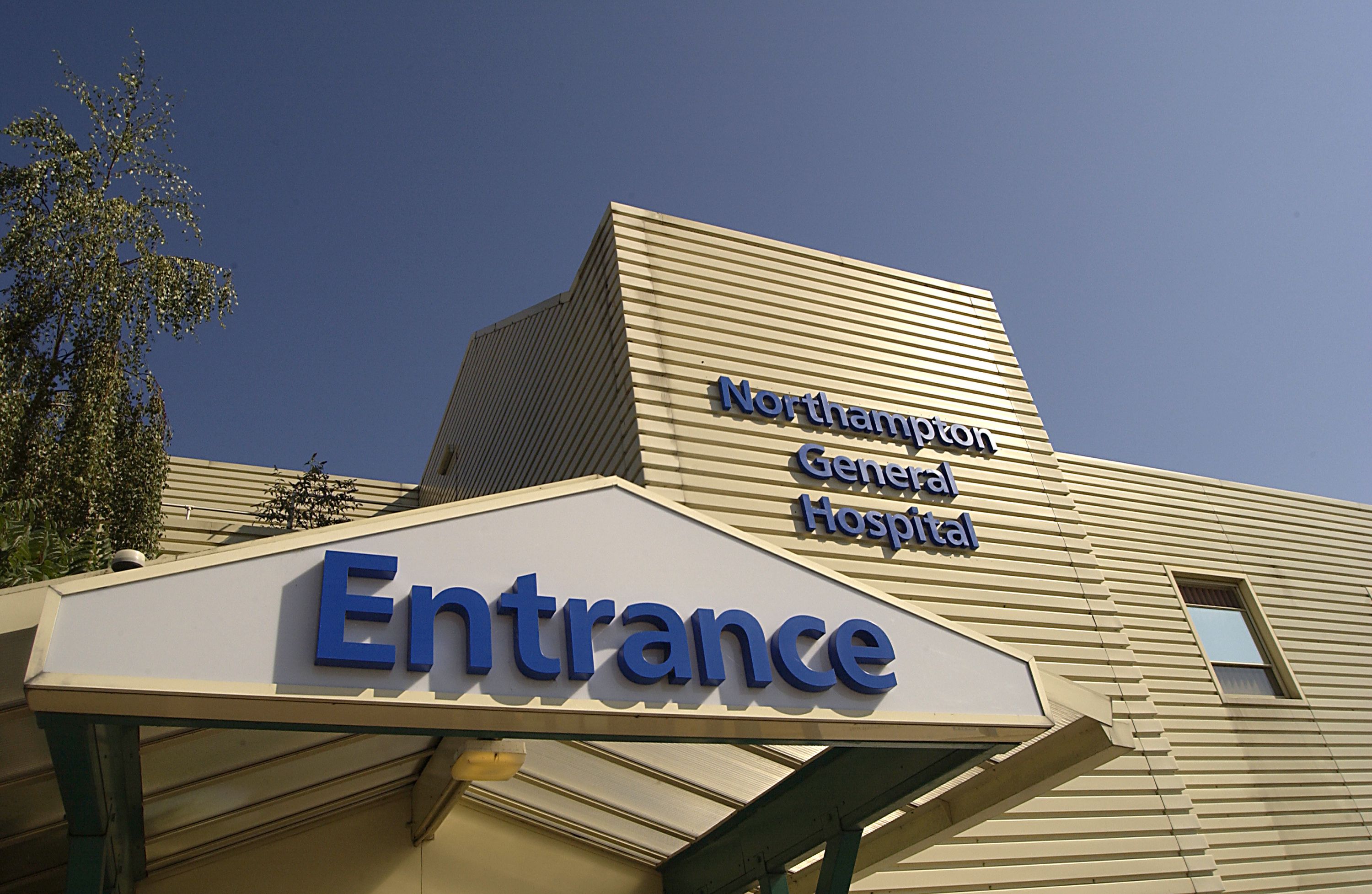
Northampton General Hospital South Entrance_1.0Northampton is the latest English NHS Trust convinced that a Vendor Neutral Archive is an essential route to a full Electronic Patient Record

Maidenhead, UK – 26 November, 2014 – Content management leader SynApps Solutions has today announced that Northampton General Hospitalhas selected its VNA (Vendor Neutral Archive) solution to manage the repatriation of its PACS (Picture Archiving and Communication System) imaging library from National Programme for IT (NPfIT), systems.

SynApps will migrate the Trust’s image archive from the existing National Programme Accenture Agfa PACS platform by early 2015 to the SynApps Vendor Neutral Archive in order to bring the images back under the control of the Trust. This archive will be the long-term archive for the Trust and simplify and de-risk the subsequent move to a new PACS provider.

As the solution incorporates comprehensive XDS Repository/Registry cross-document sharing capabilities, clinicians will in the future be able to easily and safely share Patient Images, MRI and CT Scans etc. as well as other content, such as medical photography and reports with other healthcare organisations not just locally but potentially across the country.

Apart from saving cost and boosting efficiency by the move, the Trust sees the porting in-house of its patient image library as the first step towards using the VNA archive as part of its local, digital EPR (Electronic Patient Record) system. The solution will be the backbone for providing patients with the ability to view their patient record in line with the recently published ‘Five Year Forward View’ NHS England plan that calls for more use of local systems to help achieve a full paperless NHS by 2018.

“Our new SynApps on-site VNA has a zero-footprint viewer, which means clinicians (and ultimately patients) can look at images on any device, including tablets,” comments Christina Malcolmson, Deputy Director of ICT at Northampton.

“At the moment that’s just PACS images – but we will grow it and include other images and documents, so we can have a full EPR over time,” she confirms.

One of the core demands by Christina and her team for any new partner was deep exposure to the complexity of a successful Agfa PACS migration using IOCM protocols – something that SynApps and its partners have a convincing track record in: “Trusts are finding the repatriation of data challenging so it was reassuring for us that SynApps truly understood the technical challenges. SynApps is a good supplier to work with, as it understands both the technology and how to work with the NHS.”

“We are delighted to be helping Northampton General Hospital improve the availability of working with images and improve patient care through our VNA,” notes SynApps Solutions’ Managing Director, Jim Whitelaw.

“The project demonstrates what can be achieved quickly and cost effectively in PACS migration via a VNA approach whilst laying the ground work for a truly integrated patient record.”

About Northampton General Hospital

Northampton General Hospital NHS Trust provides general acute services for a population of 380,000 and hyper-acute stroke, vascular and renal services to 684,000 people living throughout whole of Northamptonshire.  The trust is also an accredited cancer centre, providing services to a wider population of 880,000 who live in Northamptonshire and parts of Buckinghamshire. For one highly specialist urological treatment they serve an even wider catchment.

About SynApps

SynApps is an independent services and solutions company specialising in Enterprise Content Management (ECM) technologies. Founded in 2003 by former Documentum services professionals, the company provides consultancy, implementation and support services for EMC Documentum, and has authored a suite of content integration solutions, ConXApps, that allow businesses to quickly maximise their investment in ECM technologies.

Organisations across healthcare, government and commercial markets rely on SynApps solutions and services to capture and share knowledge more dynamically and efficiently.

Find out more at synapps-solutions.com, or follow the firm on Twitter @Synappssol