
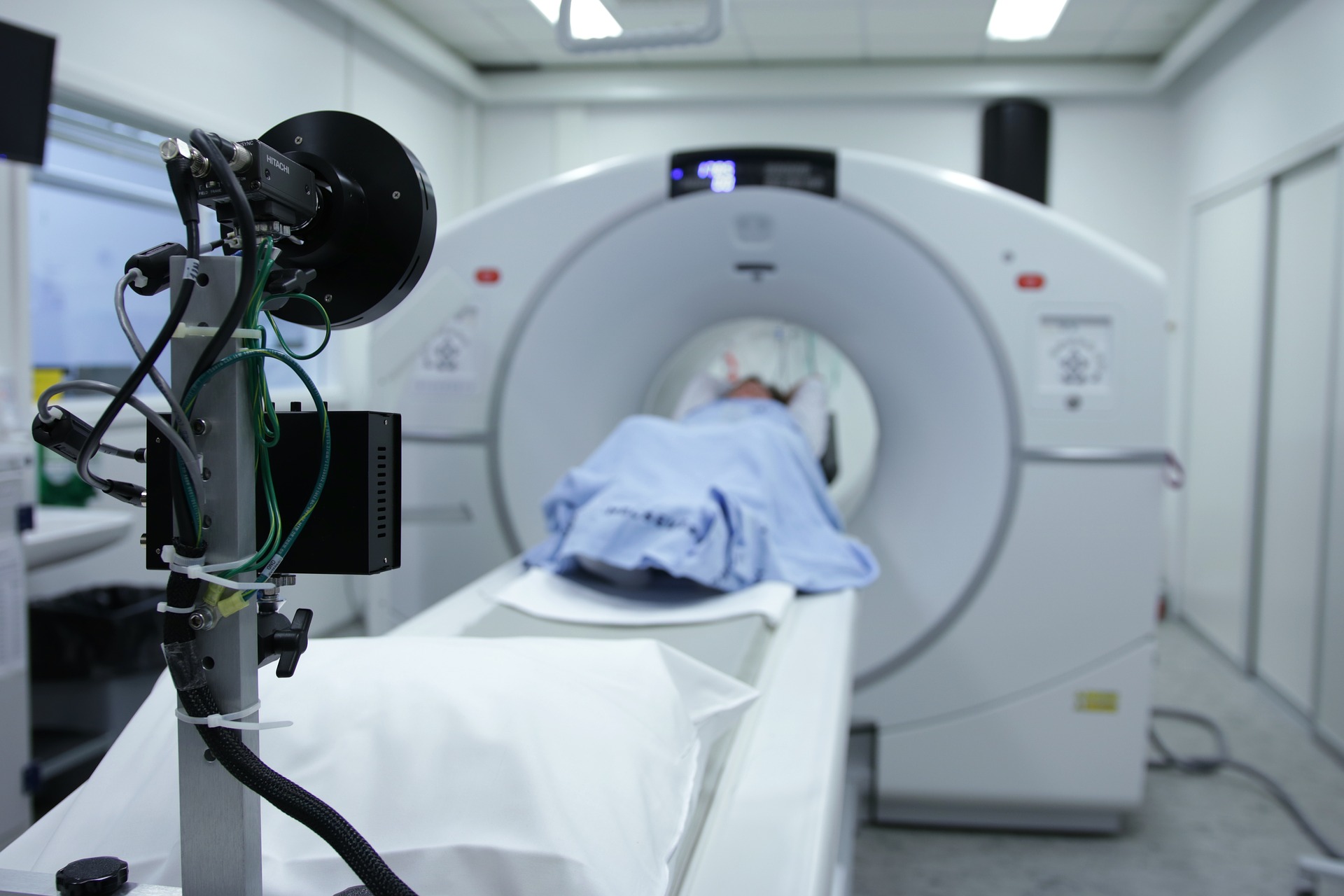
The UK-Irish technology partnership beat 7 other suppliers to the project to deliver an integrated digital solution for administering X-rays, CT & MRI scans
Hatfield, UK – December 1st, 2020 – SynApps Solutions, the enterprise content management specialist with a strong presence in UK healthcare, has won a joint contract with technology partner Aptvision to deliver an integrated digital radiology information system at Barking, Havering and Redbridge University Hospitals Trust.
SynApps and Aptvision beat seven other suppliers to the contract which will run for five years. The Trust chose their proposed solution because it was the only 100% web-based offering, allowing its radiology services to be coordinated digitally from anywhere as part of a ‘paperless NHS’.
Barking, Havering and Redbridge University Hospitals Trust (BHRUT) operates two main hospital sites – King George Hospital in Goodmayes and Queen’s Hospital in Romford, and provides clinics in outer north-east London as well as services at Barking Hospital.
For the last 18 years, its radiology services have been coordinated using an old technology solution that was no longer fit for purpose. “The supplier has ceased support and the system wasn’t being updated, so we had got to a point where it didn’t meet our needs,” explained Steve Twum, who joined as the Trust’s Head of Clinical IT Systems last year. “Our strategy is to go completely paperless, and the incumbent system didn’t allow for this, so it was time to replace it or risk losing the funds that had been set aside.”
BHRUT is a large Trust, and radiology requests and referrals can come from multiple sources. Where these are reliant on paper slips being carried by patients from one department to another, or passed to reception, there is a risk of details going astray and patients failing to proceed with a scan.
The Trust had several non-negotiable requirements. First, it sought a radiology information system (RIS) that was modern and 100% web based. Second, this had to be able to integrate and share data with other clinical systems. Steve’s team was immediately impressed by a solution proposed by Irish medical software provider Aptvision, in partnership with NHS systems integrator SynApps Solutions.
“It’s unusual to find a completely web-based system in the UK currently,” Steve noted. “Most solutions are at best 50-80 per cent web based, but we wanted to be able to provide services for clinicians and patients wherever they are so this was a big tick for SynApps and Aptvision.”
Aptvision’s Unified Health Information System manages radiology appointments completely digitally, resulting in better resource management and fewer missed appointments. (‘No shows’ are thought to account for up to 10 per cent of appointments across public hospitals.) Patients can even use the system’s online web booking form to book their own time and date for scans, for greater convenience.
Designed to integrate seamlessly with other trust systems, Aptvision’s Unified Health Information System offers controls to referring doctors, too. It can prevent overbookings, for example, and allow scan times or appointments to be shortened as appropriate, maximising service capacity. It also supports efficient, effective reporting and accelerates the delivery of scan results.
Because the Aptvision/SynApps proposition is both cloud-based and multi-tenant, no expensive hardware is required; the highest standards of security and software support are applied at source; and usability is high.
It also fulfils the Trust’s ambitions for an integrated electronic patient record (EPR), streamlining the number of clinical systems it maintains. “I am currently supporting 152 applications, and our aim is to get to an EPR – instead of lots of discrete solutions which need to be managed separately,” Steve said. “Improving the patient experience, and patient outcomes, is central to our plans.”
SynApps, which has a strong presence in the NHS for providing integrated information systems, will provide the implementation services. “I wanted the best, and the Aptvision/SynApps proposition offered us that,” Steve said. “The running costs are very reasonable and within budget, based on the modules we’ve chosen, and the quality and modern feel of the system is exactly what I wanted.”
The Trust hopes the solution will be up and running by the end of March 2021, when the incumbent system is due to be renewed.
Commenting on the project win, Jason Scholes, CTO and co-founder of SynApps Solutions, said, “We are delighted to have won another prestigious NHS contract, as Trusts look to digitise more of their processes and eliminate paper, and we look forward to working with Steve and his team to realise their ambitions. Aptvision is a trailblazer in its field, and we are very excited at the potential of this partnership.”